NEWS & BLOGS

Reducing Leak Risk with Precision TIG Welding and 100% Pressure Testing
A leak in a liquid cooling loop is never just a leak.
If you build or integrate liquid cooling systems, you already know what happens next. A few drops of coolant find their way onto a busbar or a server board. The rack goes down. The data center operator calls your account manager, not your welder. And somewhere in that conversation, a question comes up that nobody wants to answer: whose weld was it?
This is why we talk about welding and testing more than we talk about machines. Buyers sourcing stainless steel manifolds, cooling loops, quick-connect assemblies and coolant distribution hardware are not really buying tube. They are buying the confidence that a joint will hold for years inside a room full of equipment worth millions.
At Isaac Machinery, we've spent over ten years building precision metal parts and tooling, and the last several years pushing hard into stainless welded assemblies for liquid cooling systems and data center facilities. Along the way we've learned that two things separate a supplier you can rely on from one you can't: how the weld is made, and how thoroughly it's proven before it ships.
Why stainless welds leak in the first place
Most leak failures are not dramatic. They don't come from a welder who forgot to weld. They come from small, quiet decisions that accumulate.
Poor fit-up. If two tube ends meet with an uneven gap, the weld pool has to bridge inconsistent distances. The result is a joint that varies in penetration along its length. It may pass a quick visual check. It may even pass a low-pressure test on day one. Under thermal cycling and vibration, the thin spot is where the crack starts.
Inadequate back purge. When you TIG weld stainless without shielding the inside of the tube, the root side oxidizes. You get what fabricators call sugaring: a rough, crystallized, chromium-depleted surface on the inside of the joint. Two problems follow. First, the corrosion resistance at exactly that spot is compromised, which matters a great deal in a wet loop running glycol or deionized water for years. Second, the rough surface sheds particles into a system where a clogged cold plate microchannel is a field failure.
Excess heat input. Too much current, too slow a travel speed, and the heat-affected zone widens. Distortion follows. On a manifold with six or eight ports that have to line up with a bolted interface, distortion turns into misalignment, which turns into stressed joints at assembly, which turns into leaks under pressure.
Contamination. Oil from a previous process, a dirty filler rod, a glove that touched the prep surface. Stainless is unforgiving about this in a way that carbon steel is not.
Sampling instead of testing. This is the big one. A supplier tests 5% of a batch, finds nothing, and ships. The math sounds fine until you realize that a 1% escape rate on a 2,000-piece order means twenty leaking assemblies distributed randomly across your customers' racks.
Every one of these is preventable. None of them is prevented by accident.
What precision TIG welding means on our floor
TIG, or GTAW, is slower than MIG and slower than laser. We use it anyway, because for thin-wall stainless tube in a fluid-carrying application, control matters more than speed.
Here is what we actually do.
Preparation is treated as part of the weld. Tube ends are cut square and deburred, inside and out. Prep surfaces are cleaned with dedicated solvents and dedicated tools — stainless gets stainless brushes, never the ones that touched carbon steel. This sounds obvious. It is skipped constantly in shops working to a price.
Fixtures hold the geometry, not the welder's hands. For any assembly running in repeat production, we build a weld fixture. The fixture sets the angles, the port spacing and the tube-to-flange relationship, and it holds them while the joint cools. This is the single most effective thing a shop can do to make part number 500 identical to part number 5. It also controls distortion, because the fixture resists the pull of contraction rather than letting the part twist freely.
Back purge is standard, not optional. Argon is introduced to the interior of the tube, oxygen is displaced, and the root side of the weld solidifies bright and clean. On critical assemblies we purge to a verified oxygen level rather than to a stopwatch. A clean root means full corrosion resistance and no particulate shedding into your loop.
Parameters are documented per part, not per welder. Current, travel speed, filler diameter, tungsten geometry, gas flow and purge time are recorded in the process sheet for that part number. When the same assembly comes back as a reorder eight months later, it gets welded the same way, by whoever is on shift.
Welders are qualified and stay qualified. Our welders work to documented procedures and their work is tracked. The point of qualification isn't a certificate on a wall; it's knowing that the person running your job has demonstrated they can produce a sound joint in that material, that thickness, that position.
Appearance is a spec, not a bonus. Liquid cooling hardware is often visible inside a rack, and increasingly our customers' customers look at it. Consistent bead width, uniform ripple spacing, no spatter, no arc strikes on the parent material. We passivate or clean the outside so what arrives looks like it belongs in a premium product.
100% pressure testing: the part that removes your risk
Good welding lowers the probability of a leak. Only testing removes the leaking parts from the shipment.
We test every single piece. Not a sample. Not the first article and the last one. Every assembly, every time, with the result recorded against a serial or lot number.
Pressure decay testing is our workhorse. The assembly is sealed, pressurized with dry air or nitrogen to the specified test pressure, allowed to stabilize thermally, and then monitored. Pressure is measured at the start and end of a defined hold period. Any drop beyond the allowable threshold fails the part. Because the test is instrument-based rather than operator-judged, the pass/fail decision doesn't depend on who is watching.
Immersion (bubble) testing is used where a visual confirmation of leak location adds value, particularly during process validation and for first articles. The pressurized assembly is submerged and observed. It's less sensitive than the alternatives, but it tells you exactly where, which is what you need when you're correcting a process rather than just screening parts.
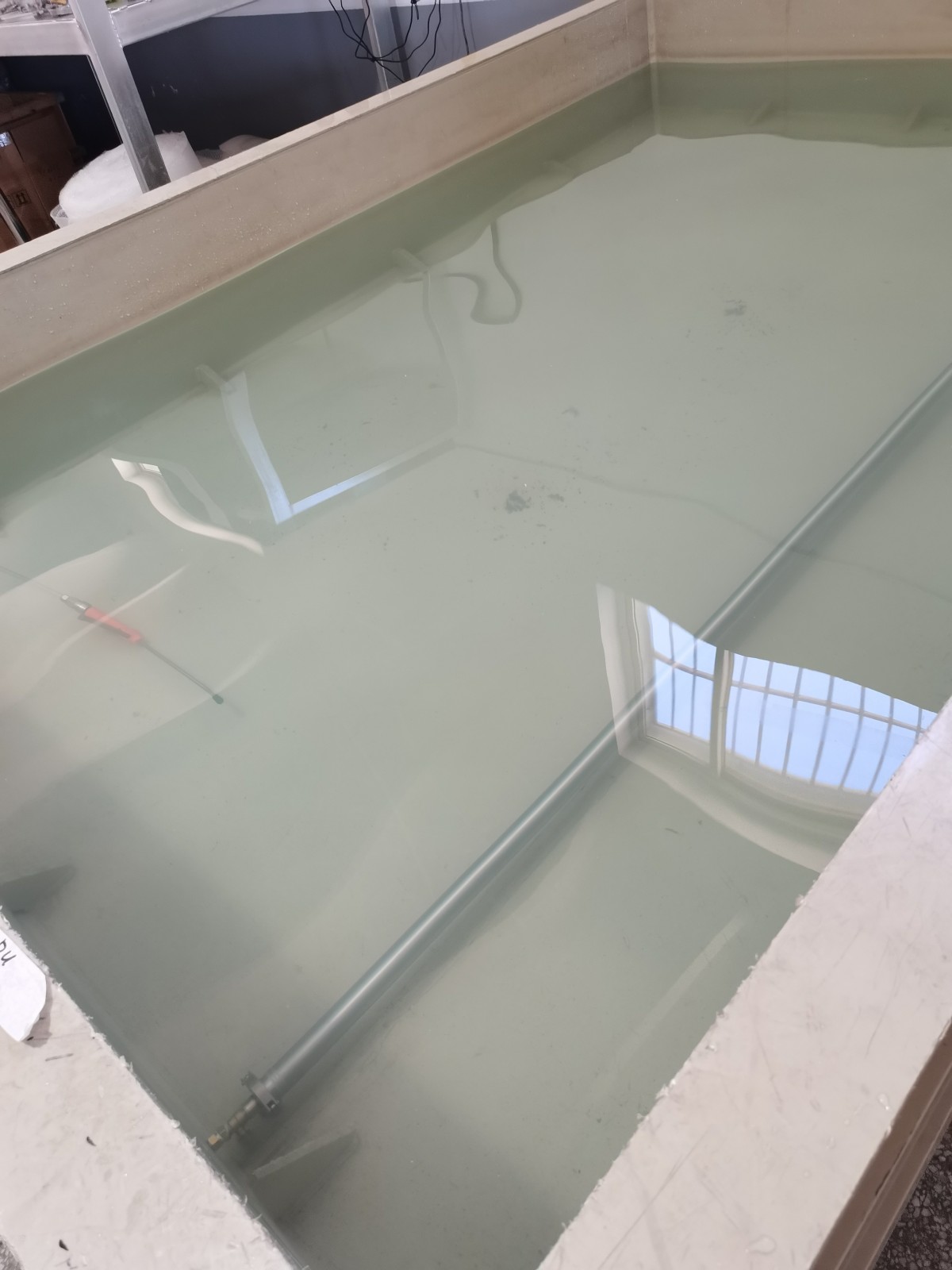
Helium leak detection is available for assemblies where the requirement is genuinely tight. Helium atoms are small and move through paths that air will not reveal in a practical timeframe. A mass spectrometer detector traces helium escaping the assembly and quantifies the rate. When your specification is written in mbar·L/s rather than "no visible bubbles," this is the method that answers it. Several of our liquid cooling customers require it, and we're set up to meet that requirement.
Test parameters come from your spec, not our habit. Tell us the medium, the test pressure, the hold time and the acceptance threshold, and that's what we run. If you don't have a spec yet, we'll propose one based on your operating pressure and application, and you approve it before production starts.
Third-party inspection is welcome. We produce to your drawings, and we're comfortable with independent verification. Many of our customers send an inspection agency before shipment. Our ISO 9001 certified quality system exists to make that visit uneventful.
Cleanliness, because a clean weld and a dirty tube is still a failed part
For liquid cooling, particulate is a failure mode in its own right. Cold plates run microchannels with very small hydraulic diameters. Debris that would be harmless in an industrial water line will block them.
So welding cleanly is only half the job. Assemblies are cleaned after fabrication, capped or bagged after testing, and handled so the interior stays protected through packing and transit. If your process requires a specific cleanliness level or a particular capping method, tell us during quoting and we'll build it into the routing rather than bolting it on later.
What this looks like when you buy from us
We work from your drawings. Dimensions, tolerances, materials, weld symbols, test requirements. If something on the print will cause a manufacturability problem, we raise it before we quote, not after you've approved samples.
Small batches are genuinely welcome. A lot of suppliers say this and then quote a price that says otherwise. Prototype and pilot quantities are a normal part of our week. Liquid cooling is moving fast and designs iterate; we'd rather grow with a program from twenty pieces than only appear when it hits ten thousand.
Lead times are short for metal parts. Machined and fabricated components typically run 7 to 20 days depending on complexity and quantity. Where tooling is required, mold design and manufacture runs about 28 days, and we do our own tool design in-house.
Tooling is designed for change. We modify and re-cut tools rather than starting over when a design evolves, and we regularly build tools that produce multiple part variants. For customers in a fast-moving segment, this is how the cost of iteration stays manageable.
Our equipment base is real. 35 CNC precision lathes, 8 machining centers including one with 4.5 m of travel, 3 CNC bar-feed automatic lathes, 3 high-performance stamping presses, 3 precision injection molding machines, plus our sheet metal and welding departments. Machining, forming, welding and assembly happen under one roof, which means fewer handoffs and one company accountable for the finished assembly.
We also manufacture tractor components as an OEM supplier to a Korean brand, produce industrial air filter cartridges including antistatic, explosion-protected and PTFE-membrane types, and build precision assemblies for appliance and commercial equipment makers such as coffee machine bodies and extraction wands. Different industries, same underlying discipline.
Frequently asked questions
Do you test every part or a sample?
Every part. 100% pressure testing is standard on welded fluid-carrying assemblies, and results are recorded against the lot or serial number. Sampling plans are available only where a customer specifically requests one.
Can you perform helium leak testing?
Yes. Helium mass spectrometry is available for assemblies with tight leak-rate requirements. Give us your acceptance threshold in the units your spec uses and we'll confirm feasibility during quoting.
Which stainless grades do you weld?
We routinely work with 304 and 316 series stainless in tube, sheet and machined form. If your application requires a different grade, send the spec and we'll confirm.
Will the inside of the weld be clean?
Yes. Back purging with argon is standard practice for our stainless fluid assemblies, which prevents root oxidation and the particle shedding that comes with it.
What's your minimum order quantity?
We accept small batch orders, including prototypes and pilot runs. Pricing scales with quantity, but we don't turn away low volumes.
How long does a first order take?
Metal parts generally ship in 7 to 20 days. Add roughly 28 days if new tooling is required. Complex welded assemblies with first-article approval steps take longer, and we'll give you a dated schedule with the quotation rather than a range.
Are you certified?
Our factory holds ISO 9001 certification. We also manufacture as an OEM supplier for a Korean tractor brand, which brings its own audit requirements.
Can we send an inspection agency?
Please do. Third-party inspection is routine for us and we'll support the visit with the documentation, test records and access it requires.
Can you help with design for manufacturing?
Yes. We design and build our own tooling, and we'll flag features that add cost or risk before production starts. Customization is the core of what we do; sending us a drawing and asking "can this be made better?" is a normal conversation here.
What if a part fails in the field?
Our test records are traceable by lot. That means we can tell you what a specific assembly measured before it shipped, which is usually the fastest route to a root cause, whether the answer points at us or somewhere else in the system.
Let's talk about your assembly
If you're sourcing stainless welded assemblies for liquid cooling, data center infrastructure, or any application where a leak is expensive, we'd like to look at your drawing.
Send us: your drawing or 3D file, the material and grade, the annual and initial quantities, your leak test requirement (pressure, medium, hold time, acceptance threshold), and any cleanliness or packaging specification.
You'll get back: a quotation with a dated lead time, our proposed process and test plan, and our honest read on anything in the design that will cause trouble in production.
Send your drawing and let's find out whether we're the right fit. If we're not, we'll tell you that too.
What Can We Do For You