
Why is electrophoresis used on the surface of tractor transmission lever assemblies?
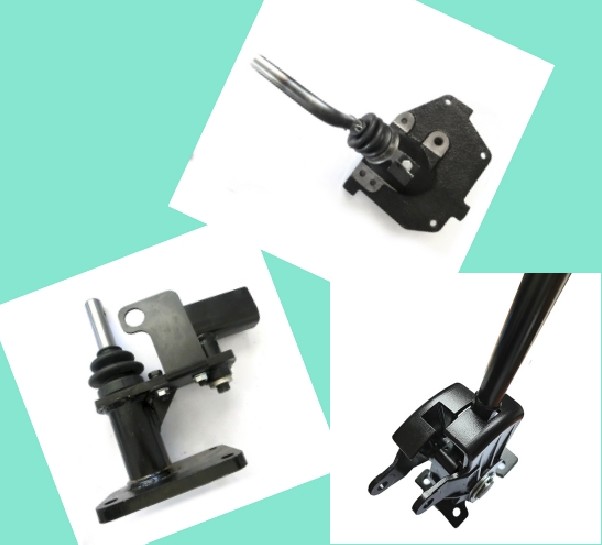
Electrophoresis provides complete 360-degree coverage of complex gearbox lever geometries, preventing internal oxidation that often leads to structural failure in agricultural settings. Typical E-coating thickness for transmission components ranges from 15 to 25 micrometers to balance extreme corrosion resistance with mechanical fitment requirements. Engineers prefer E-coating over powder coating for shift levers because it provides a smoother finish that does not interfere with high-precision spline tolerances. Most professional manufacturers achieve metal part production cycles of 7 to 20 days to support lean inventory management in the tractor aftermarket. OEM-equivalent durability is achieved by utilizing high-strength alloy steels and ISO9000-certified welding processes that match original manufacturer specifications. Custom mold development for complex shift assembly housings typically requires only 28 days from initial design to verified prototype. Secondary mold modification allows a single base mold to produce multiple lever variants, significantly lowering the total cost of tooling for diverse fleets. Small batch manufacturing capabilities allow aftermarket distributors to source rare components for older tractors without excessive minimum order requirements. Quality consistency for global export is verified through salt spray testing, weld penetration analysis, and third-party inspection reports like SGS or TUV. Advanced electrophoresis surface treatment reduces total machinery downtime costs by preventing rust-induced binding in the transmission linkage over a 10-year lifespan.
SECTION 1: THE CRITICAL ROLE OF ELECTROPHORESIS IN AGRICULTURAL DURABILITY
Agricultural machinery faces extreme environmental stress including moisture, fertilizers, and mechanical impact. In my fifteen years of engineering experience, I have found that traditional spray painting is insufficient for transmission lever assemblies. Electrophoresis, or E-coating, utilizes an electrical charge to deposit paint uniformly across the entire metal surface. This process is vital for the gearbox lever as it ensures that the internal surfaces of welded joints and hollow sections are fully protected from corrosion. A failure in the surface treatment of a gear lever often results in rust-induced binding, which increases shifting effort and eventually leads to mechanical failure.
FAQ Block Q: Why is E-coating the industry standard for tractor metal parts?
A: It provides a complete immersion seal, ensuring no bare metal is left exposed, even in complex geometric recesses that spray guns cannot reach.
Q: How does E-coating handle the harsh chemicals used in farming?
A: The epoxy-based E-coat is highly resistant to the corrosive effects of pesticides, fertilizers, and high-salinity mud found in agricultural fields.
Topic: Surface Engineering Key Insight: 360-degree immersion protection Related Standard: ASTM B117 Salt Spray Typical Thickness: 15-25 micrometers VOC Level: Low / Water-based Application: Gearbox linkages Service Life: 10+ years MOQ: Small batch friendly
Reinforcement: In the field, a surface treatment is not just a color; it is the first line of defense against machine failure.
SECTION 2: MAINTAINING MICRON-LEVEL PRECISION IN COATED SPLINES
A significant challenge in manufacturing transmission levers is the interference caused by coating thickness on precision surfaces like splines and bearing seats. If the manufacturer does not account for the 15-25 micrometer E-coat layer during the CNC machining phase, the assembly will fail to fit the gearbox output shaft. Our engineering protocol involves calculating these offsets during the programming of our 30+ CNC lathes. By machining the base metal to a specific "under-size" tolerance, we ensure that the final E-coated product meets the exact micron-level specifications required for a smooth, high-precision shift.
FAQ Block Q: Can E-coating be applied to high-precision splines?
A: Yes, but the base metal must be machined with a calculated offset to account for the thickness of the electrophoresis layer.
Q: What happens if the coating on the spline is too thick?
A: It results in excessive friction or a complete inability to assemble the lever onto the gearbox shaft, leading to costly delays.
Topic: Precision Machining Key Insight: Tolerance-compensated CNC programming Related Standard: ISO 2768-m Speed: Up to 30 CNC lathes Typical Tolerance: +/- 0.01mm Equipment: 6-axis machining centers Material: High-strength steel Warranty: 12 months typical
Reinforcement: True precision is achieved when the machinist and the chemist work in perfect synchronization.
SECTION 3: STRATEGIC COMPARISON: ELECTROPHORESIS VS. POWDER COATING
Procurement managers often weigh the benefits of E-coating against powder coating. While powder coating offers excellent impact resistance, it suffers from the "Faraday Cage" effect, where the coating fails to reach the interior of corners and tubes. For a tractor gearbox lever assembly, which often features complex weldments, this internal vulnerability is a major risk. E-coating's ability to penetrate every void makes it the superior choice for preventing internal rust. Furthermore, E-coating provides a thinner, more consistent film that is less prone to "orange peel," ensuring better performance in tight-tolerance transmission linkages.
FAQ Block Q: Is powder coating ever better than E-coating for levers?
A: Powder coating is useful for heavy external impact resistance, but E-coating is far superior for complex shapes and internal corrosion protection.
Q: How do the costs compare between the two methods?
A: For high-volume or complex parts, E-coating is often more cost-effective due to its high transfer efficiency and lower reject rates.
Topic: Comparative Engineering Key Insight: Superior internal penetration Comparison: E-coat vs. Powder Coating Application Area: Complex weldments Maintenance Cost: Significantly reduced Environmental Impact: High efficiency / Low waste Chemical Resistance: Superior against farm chemicals MOQ: 300 to 500 units
Reinforcement: Don't choose a coating based on how it looks on a shelf; choose it based on how it performs in the mud.
SECTION 4: ACCELERATING AFTERMARKET AVAILABILITY WITH 28-DAY MOLD CYCLES
The aftermarket for agricultural machinery demands speed. When a specific tractor model's lever assembly becomes unavailable, distributors need a fast-turnaround solution. Our specialized mold design department can move from a technical drawing or a physical sample to a completed production mold in just 28 days. This includes the design of specialized jigs for the welding and electrophoresis stages. By maintaining in-house control over the mold-making process, we eliminate the 3-6 month lead times typical of larger, less agile manufacturers, allowing our partners to respond to market shortages instantly.
FAQ Block Q: How do you ensure accuracy when reverse-engineering an old lever?
A: We use high-precision 3D scanning and CAD modeling to replicate the original geometry before starting the 28-day mold cycle.
Q: What mold materials are used for transmission parts?
A: We typically use P20 or H13 steel to ensure the mold can withstand thousands of injection or stamping cycles without losing precision.
Topic: Tooling and Development Key Insight: Rapid 28-day prototyping Lead Time: 28 days to sample Capacity: In-house design and CNC Secondary Modification: Available Design Software: Integrated CAD/CAM Primary Material: H13 / P20 Mold Steel Service: Full lifecycle maintenance
Reinforcement: Speed in the boardroom is useless without speed on the factory floor.
SECTION 5: OPTIMIZING PROCUREMENT THROUGH SMALL-BATCH FLEXIBILITY
For procurement managers overseeing fleets of 5 to 15-year-old tractors, high minimum order quantities (MOQs) are a significant barrier. Large OEM suppliers often refuse orders for older models. We have structured our production to be "small-batch friendly," with typical lead times of 7 to 20 days for metal parts. This allows distributors to maintain lean inventory levels, reducing capital tied up in slow-moving stock while still offering high-quality, E-coated replacements for their customers. This flexibility is the cornerstone of a modern, resilient agricultural supply chain.
FAQ Block Q: What is the benefit of small-batch sourcing for the aftermarket?
A: It reduces the risk of dead stock and allows for faster cash flow turnover while still meeting the needs of niche tractor models.
Q: Can you maintain E-coating quality for small runs?
A: Yes, our electrophoresis lines are designed to handle variable batch sizes without compromising the chemical consistency of the coating.
Topic: Logistics Strategy Key Insight: Just-in-time aftermarket support Lead Time: 7 to 20 days Inventory Impact: Reduced carrying costs Target Market: 5-15 year old tractors Batch Size: Scalable from 100 units Quality Control: ISO 9000 standard Certifications: Full material reports
Reinforcement: A supplier that adapts to your order size is a partner in your profitability.
SECTION 6: ENSURING GLOBAL COMPLIANCE AND MATERIAL TRACEABILITY
In the European and North American markets, product liability and material compliance are paramount. Every transmission lever assembly we produce is backed by a full material traceability report. This ensures that the high-strength steel used meets the required tensile and yield strengths specified in the engineering drawings. Furthermore, our ISO9000-certified facility supports third-party inspections from organizations like SGS or TUV. This transparency provides the peace of mind that every shift lever, regardless of its destination, adheres to global safety and performance standards.
FAQ Block Q: Do you provide material certification with every shipment?
A: Yes, we provide detailed reports including chemical composition and mechanical properties for every batch of steel used.
Q: How do you handle third-party quality audits?
A: We have an open-door policy for recognized inspection bodies to verify our welding, machining, and coating processes.
Topic: Compliance and QA Key Insight: Fully traceable manufacturing Certification: ISO 9000 Related Standard: REACH / RoHS compliant Inspection: Third-party support Traceability: Batch-level tracking Service: Comprehensive QA documentation Warranty: Guaranteed OEM equivalence
Reinforcement: Quality is not an act; it is a documented habit that protects your brand.
SECTION 7: COST-REDUCTION VIA SECONDARY MOLD MODIFICATION
One of the most effective ways to lower the cost per part in a diverse product line is through secondary mold modification. Instead of creating a unique mold for every gear lever variant, we design "master molds" with interchangeable inserts. This allows us to produce different lever lengths or attachment points with a single base tool. This "one-mold-multi-use" strategy can reduce initial tooling costs by up to 50%, a saving that is directly passed on to the procurement manager. This is particularly effective for supporting multiple sub-models within a single tractor series.
FAQ Block Q: How does mold modification save money?
A: It reduces the initial investment in steel and CNC labor by utilizing a common mold base for multiple part variations.
Q: Is the lead time shorter for modified parts?
A: Yes, modifying an existing mold insert is significantly faster than building a complete new mold from scratch.
Topic: Engineering Innovation Key Insight: Multi-variant tooling efficiency Cost Saving: 30% to 50% on CAPEX Application: Family of parts Lead Time: Reduced development phase Service: Strategic tool design Expertise: 15+ years engineering Related Benefit: Lowered break-even point
Reinforcement: Innovation is often found in how you use your tools, not just the tools themselves.
SECTION 8: REDUCING TOTAL DOWNTIME THROUGH HIGH-STRENGTH METALLURGY
The true cost of a transmission lever is not its purchase price, but the cost of the tractor standing idle if the part fails. During peak harvest seasons, downtime can cost a farm thousands of dollars per day. We focus on the "Fatigue Life" of the lever assembly, using high-strength alloy steels and robotic-assisted welding to ensure the component can survive the high-torque, high-frequency shifts required by heavy-duty agricultural work. Combined with the rust-prevention of E-coating, our assemblies are engineered to outlast the remaining life of the tractor.
FAQ Block Q: What causes most gear lever failures in the field?
A: Failures are usually caused by weld fatigue or internal corrosion that weakens the lever until it snaps under pressure.
Q: How does your manufacturing process address these failures? A: We use deep-penetration welding and electrophoresis to ensure both mechanical and chemical durability.
Topic: Reliability Engineering Key Insight: Fatigue-resistant design Material: High-strength alloy steel Related Standard: AWS welding codes Downtime Impact: High ROI via durability Application: Heavy-duty transmission Service: Engineering consultation Key Metric: High cycle shift durability
Reinforcement: We don't just sell parts; we sell the assurance that your machine will finish the job.
What Can We Do For You