
Why 80% of Small Appliance Defects Start from Stamping Die Precision: The Hidden Truth OEM Buyers Must Understand (Part 1)
In today’s global manufacturing landscape, small appliances—from kitchen devices to smart home components—are produced at massive scale. Yet behind every perfectly assembled product lies a critical factor that many buyers underestimate: stamping die precision.
For manufacturers, wholesalers, and OEM procurement professionals, stamping dies are not just tooling—they are the foundation of dimensional accuracy, surface quality, and production efficiency. A slight deviation in die precision can result in thousands of defective parts, delayed shipments, and damaged brand reputation.
This article, Part 1 of a deep-dive series, explores the core manufacturing technologies behind precision stamping dies and their critical role in small appliance applications. It also reveals industry pain points and sourcing strategies that help buyers choose reliable OEM partners.
Industry Pain Point: Why Precision Failures Are Costing Manufacturers Millions
Across the small appliance industry, a recurring issue continues to affect both manufacturers and global buyers: inconsistent product quality caused by stamping defects.
Common problems include:
Dimensional deviation leading to assembly issues
Surface scratches and burrs affecting product appearance
Inconsistent batch quality causing high rejection rates
Frequent mold rework increasing production costs
In many cases, these problems are traced back not to materials or assembly—but to insufficient stamping die precision.
For OEM buyers, this creates a critical challenge: how to identify suppliers who can consistently deliver high-precision tooling at scale.
Understanding Cold Stamping: The Foundation of Modern Manufacturing
Cold stamping is a pressure-based manufacturing process performed at room temperature. By applying force through a die installed on a press machine, materials undergo separation or plastic deformation to form desired shapes.
Key advantages of cold stamping:
High production efficiency
Consistent repeatability
Low material waste
Suitability for mass production
In small appliance manufacturing, cold stamping is widely used for producing metal housings, brackets, connectors, and internal structural components.
However, the success of this process depends heavily on the precision and quality of the stamping die.
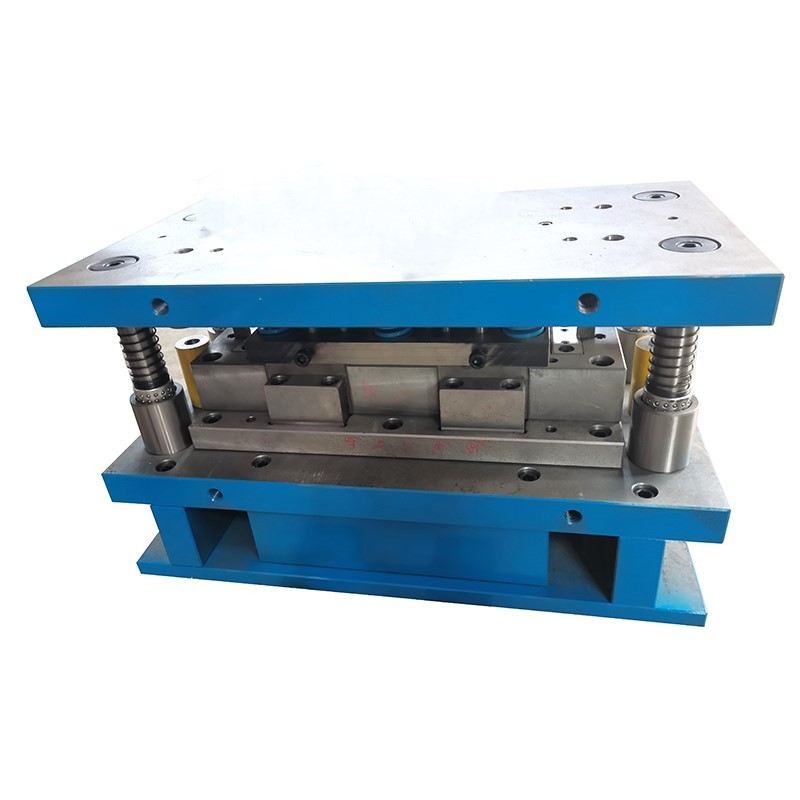
Core Components of Precision Stamping Dies
Stamping dies consist of several critical forming components:
Die (female mold)
Punch (male mold)
Combined die structures
These components often feature complex geometries and tight tolerances. Even minor machining errors can lead to significant production defects.
Key technical requirements include:
High dimensional accuracy
Smooth surface finish
Strong wear resistance
Stable structural integrity
For high-volume small appliance production, maintaining consistent die performance over long cycles is essential.
Advanced Stamping Die Manufacturing Technologies
To achieve high precision, modern stamping die manufacturing relies on multiple advanced technologies. Each method plays a unique role in shaping complex components.
- Extrusion Forming Technology
This method uses pressure to shape metal into precise geometries. It is suitable for high-strength parts requiring tight tolerances. - Chemical Etching Forming
Chemical processes are used to remove material and create fine features. This method is ideal for intricate designs and thin materials. - Alloy Build-Up Welding
This technique repairs or enhances die surfaces by adding alloy material. It improves wear resistance and extends tool life. - Manual Finishing and Fitting
Despite automation, skilled technicians are still required for fine adjustments. Hand finishing ensures final precision and alignment.
Industry Insight:
High-precision dies are rarely the result of a single process. Instead, they require a combination of machining technologies, engineering expertise, and quality control systems.
Long-tail keywords: stamping die manufacturing technology comparison, high precision die machining methods
Classification of Stamping Dies and Their Applications
Different types of stamping dies are used depending on product requirements.
- Blanking and Punching Dies
Used for cutting operations such as punching holes, trimming edges, and blanking parts. These are widely used in small appliance metal components. - Compression Dies
Apply high pressure to deform materials into desired shapes. These require high-capacity press systems and skilled operation. - Forming Dies
Used to create complex shapes through controlled deformation. These are essential for producing structural and aesthetic components.
Each type of die requires different precision levels, materials, and maintenance strategies.
Application in Small Appliances: Why Precision Matters More Than Ever
Small appliances demand high standards in both functionality and appearance. Consumers expect products that are not only durable but also visually flawless.
Stamping die precision directly impacts:
Assembly compatibility
Surface finish quality
Product durability
Noise and vibration performance
For example, poorly stamped components can lead to misalignment in appliance housings, causing operational noise or reduced lifespan.
For brands targeting premium markets in Europe and North America, precision is not optional—it is mandatory.
How OEM Buyers Should Evaluate Stamping Die Suppliers
Choosing the right supplier is one of the most critical decisions for OEM buyers.
Key evaluation factors:
Die manufacturing capability and equipment
Tolerance control and inspection systems
Experience in small appliance components
Ability to provide customization and engineering support
Consistency in mass production
Buyers should also assess whether suppliers integrate design, manufacturing, and maintenance into a complete solution.
Long-tail keywords: how to choose stamping die supplier, OEM precision mold manufacturer evaluation
Market Insight: Precision Manufacturing Is Becoming a Competitive Advantage
With increasing competition, manufacturers are shifting from cost-driven sourcing to value-driven sourcing.
Key trends include:
Demand for higher precision and consistency
Increased focus on long-term supplier partnerships
Integration of automation and quality control systems
Rising expectations for engineering support
Suppliers who can deliver precision, reliability, and flexibility are gaining a strong competitive edge in global markets.
Conclusion: Precision Is the Starting Point of Product Quality
Stamping die precision is not just a technical detail—it is the starting point of product quality, production efficiency, and brand reputation.
By understanding manufacturing technologies, die classifications, and supplier capabilities, OEM buyers can make smarter sourcing decisions and reduce long-term risks.
In Part 2, we will explore deeper into tolerance control, material selection, and cost optimization strategies in precision stamping die manufacturing.
Frequently Asked Questions (FQA)
Why is stamping die precision so important in small appliance manufacturing?
Because even small deviations can lead to assembly issues, product defects, and inconsistent quality across production batches.
What is the biggest challenge in stamping die manufacturing?
Maintaining high precision while ensuring durability and cost efficiency in large-scale production.
How can OEM buyers ensure consistent quality from suppliers?
By evaluating supplier capabilities in precision machining, quality control systems, and production experience.
What industries benefit most from high precision stamping dies?
Small appliances, automotive components, electronics, and engineering machinery all rely heavily on precision stamping.
If you are sourcing precision stamping dies or metal components for small appliances, choosing the right OEM partner is critical.
We specialize in precision mold manufacturing and OEM metal parts production for global clients across multiple industries. With advanced machining capabilities and strict quality control systems, we help buyers achieve high precision, consistency, and long-term reliability.
Contact us today to discuss your stamping die requirements and discover how precision manufacturing can elevate your product quality and market competitiveness.
What Can We Do For You