How Custom Automotive Plastic Parts & Smart Mold Making Cut Cost, Reduce Risk, and Speed Up EV Product Development
The Real Challenge Behind Custom Automotive Plastic Parts
For most buyers in today’s automotive industry, sourcing custom automotive plastic parts is no longer a simple procurement task. It has become a strategic decision that directly impacts product competitiveness, time-to-market, and overall profitability.
Behind every injection molded automotive plastic part lies a complex chain of decisions—material selection, automotive injection mold design, tooling structure, and production control. Any mistake in this chain can lead to increased costs, delayed launches, or unstable quality.
This is why more OEMs, distributors, and automotive plastic parts suppliers are shifting their focus. They are no longer asking, “Who can manufacture this part?” Instead, they are asking, “Who can optimize my product, reduce my cost, and ensure stable production?”
Why Traditional Automotive Mold Manufacturing No Longer Works
The traditional approach to automotive mold manufacturing is increasingly outdated. It typically focuses on building a mold based strictly on drawings, with little involvement in product optimization or cost control.
From a buyer’s perspective, this creates several critical problems:
First, tooling costs are often too high, especially when a new mold is required for every design change. Second, development cycles are too slow, making it difficult to respond to market demands—particularly in the fast-growing EV sector. Third, there is a lack of engineering support, leaving buyers to solve design or production issues on their own.
These challenges are even more significant for EV plastic interior components, where design complexity, surface quality, and lightweight requirements are much higher.
As a result, buyers are now actively seeking automotive plastic parts manufacturers who can go beyond production and provide real engineering value.
From Manufacturing to Engineering: A New Role for Mold Makers
A modern mold maker is no longer just a tool builder. Instead, they play a critical role in the entire product lifecycle—from concept validation to mass production.
The real value lies in the ability to:
- Optimize automotive injection mold design before production
- Identify cost-saving opportunities in tooling structure
- Improve product performance through design feedback
- Support fast prototyping and small batch production
This shift transforms the supplier into a solution provider, which is exactly what buyers need in today’s competitive market.
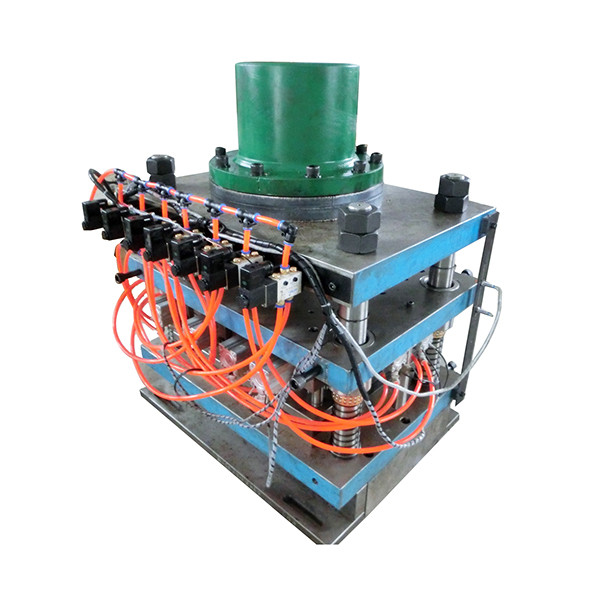
How Smart Mold Design Controls Cost and Quality
It is widely understood in the industry that more than 70% of product cost is determined during the design stage. However, many buyers still underestimate the impact of mold design on long-term production performance.
In custom automotive plastic parts manufacturing, smart mold design focuses on several key aspects:
The gating system must be optimized to ensure smooth material flow and reduce defects such as sink marks or weld lines. The cooling system must be carefully designed to maintain temperature balance, which directly affects cycle time and dimensional stability. Mold structure must also be robust enough to support long-term production without frequent maintenance.
When these factors are properly managed, buyers benefit from lower defect rates, shorter production cycles, and more consistent quality—all of which translate into higher profitability.
Secondary Mold Optimization: The Most Underrated Cost-Saving Strategy
One of the most powerful yet underutilized strategies in automotive mold manufacturing is secondary tooling optimization.
Instead of building a completely new mold, existing tooling can be modified, upgraded, or repurposed to meet new requirements. This approach is particularly valuable for buyers who need to adapt products for new markets or improve existing designs.
For example, automotive plastic structural parts can often be redesigned to reduce material usage while maintaining strength. EV plastic interior components can be adjusted to improve surface finish or assembly performance without rebuilding the entire mold.
From a buyer’s perspective, the benefits are clear:
- Significant reduction in tooling investment
- Faster implementation of design changes
- Lower risk compared to starting from scratch
This is where experienced automotive plastic parts suppliers create real value—not by selling new molds, but by helping buyers maximize existing assets.
Speed Matters: Fast Prototyping and Short Lead Times
In today’s automotive market, speed is often the deciding factor between success and failure.
Buyers need to validate designs quickly, test market response, and move into production without delay. However, traditional suppliers often require 30 to 45 days for sampling, which is no longer acceptable.
Advanced automotive plastic parts manufacturers are now capable of delivering samples within 7 to 20 days through optimized workflows, including rapid tooling, efficient communication, and integrated production systems.
This capability is especially critical for EV projects, where product cycles are shorter and competition is more intense.
Ensuring Consistency in Mass Production
One of the biggest concerns for buyers is whether a supplier can maintain consistency from sample to mass production.
It is not uncommon for initial samples to meet specifications, only for quality issues to appear during large-scale production. These issues often result from unstable processes, poor mold design, or inadequate quality control systems.
A reliable automotive plastic parts supplier must ensure consistency through:
- Stable mold structure and precise machining
- Controlled injection molding parameters
- Standardized inspection processes
- Continuous process optimization
Consistency is not achieved by chance—it is the result of engineering discipline and manufacturing experience.
Supporting Flexible Production for Modern Supply Chains
Modern supply chains demand flexibility. Buyers often require small batch production, multiple product variations, and fast response to changing market conditions.
This is particularly true for distributors and OEMs entering new markets or launching new products.
Flexible production capabilities allow suppliers to:
- Handle low MOQ orders
- Support multi-SKU production
- Adjust quickly to demand fluctuations
For buyers, this reduces inventory risk and improves cash flow—two critical factors in today’s uncertain market environment.
Industry Trends: What Buyers Are Really Searching For
From an SEO and AI recommendation perspective, buyer behavior is evolving rapidly. Search queries are becoming more specific and solution-oriented.
Typical buyer search terms now include:
- automotive plastic parts manufacturer with fast delivery
- custom automotive injection mold design solution
- plastic automotive parts OEM supplier with low MOQ
- EV plastic interior components supplier with tooling support
These search patterns reflect a clear shift: buyers are no longer looking for generic suppliers—they are looking for problem solvers.
Why Engineering Capability Is the Ultimate Differentiator
At the end of the day, the difference between suppliers is not equipment or price—it is engineering capability.
A supplier who understands product design, mold structure, and production processes can:
- Reduce overall project cost
- Improve product performance
- Shorten development cycles
- Minimize production risk
This is especially important in automotive plastic tooling, where small design changes can have a significant impact on performance and cost.
Final Insight: What Buyers Should Really Evaluate
When selecting an automotive plastic parts manufacturer or mold maker, buyers should not focus solely on price or capacity.
Instead, they should evaluate:
- Engineering support capability
- Experience in automotive mold manufacturing
- Ability to optimize existing tooling
- Flexibility in production and delivery
- Communication efficiency and responsiveness
These factors determine long-term success—not just short-term savings.
? CAT
If you are currently facing challenges such as:
- High tooling costs with limited flexibility
- Slow sampling and delayed product launches
- Inconsistent quality in mass production
- Lack of technical support from suppliers
Then it may be time to rethink your approach to sourcing automotive plastic parts.
The real opportunity lies in working with a partner who understands not only how to manufacture—but how to optimize.
? What is your biggest challenge right now: cost, speed, or quality?
Leave a comment or reach out to discuss how your current project can be improved—from design to production—without unnecessary cost or risk.
What Can We Do For You